Deconstructing Market Filtering Logic and Conditional Scan Stacks
ConditionStack Journal investigates how mathematical filters, boolean operators, and temporal datasets intersect. We scrutinize screening pipelines to identify structural weaknesses, calculation bottlenecks, and logical redundancies in rule-based market discovery.
Filter Layering
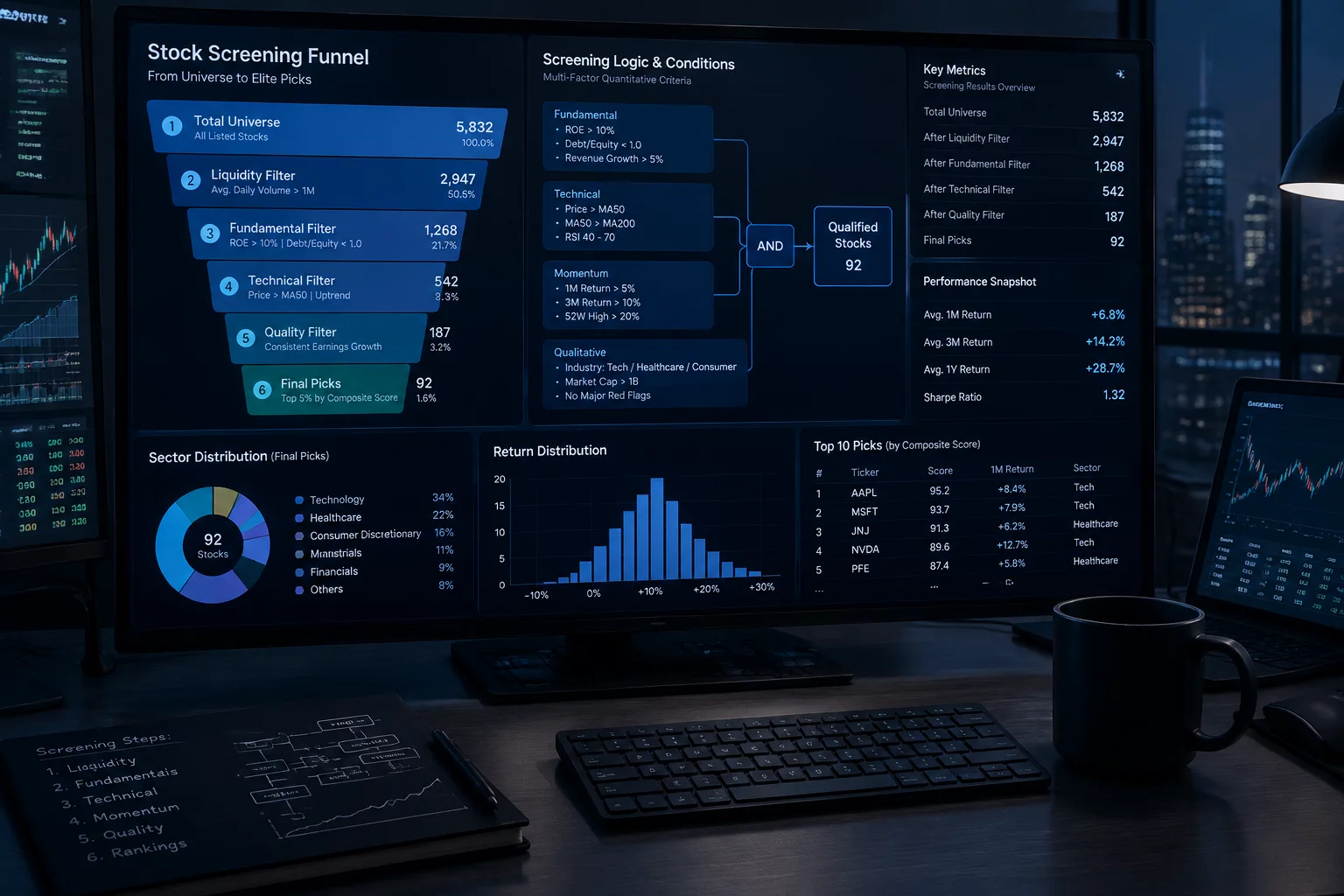
Examining the hierarchical progression from macro universes down to liquidity and momentum thresholds.
Objective Scope
Strictly educational documentation of scan rules without opinionated ratings, asset suggestions, or alerts.
- Deterministic conditional mechanics over subjective evaluation
- Rigorous identification of contradictory criteria and query bloat
- Explicit separation of informational research and financial activity
Defining Our Structural and Editorial Boundaries
ConditionStack Journal operates under deliberate constraints designed to maintain unbiased technical focus. We maintain transparent operational barriers between screening logic study and commercial finance.
Quantitative Rule Audits
We examine how operators like moving standard deviations, percentile ranks, and boolean constraints combine to reduce query universe sizes efficiently.
Timeframe Correlation
Our publications review temporal synchronization errors that emerge when merging disparate intraday, daily, and weekly evaluation parameters.
Rigorous Scope Limits
We are not a brokerage desk, we do not curate asset selections, and we never issue trading signals. Readers study query logic strictly for data analysis education.
Interactive Framework Modules
Select an architectural domain below to review the specific mathematical constraints and parsing mechanics examined in our educational dossiers.
Multi-Stage Funneling
Staging universe criteria to weed out unliquidated symbols prior to running expensive compute formulas on historical series.
Boolean Optimization
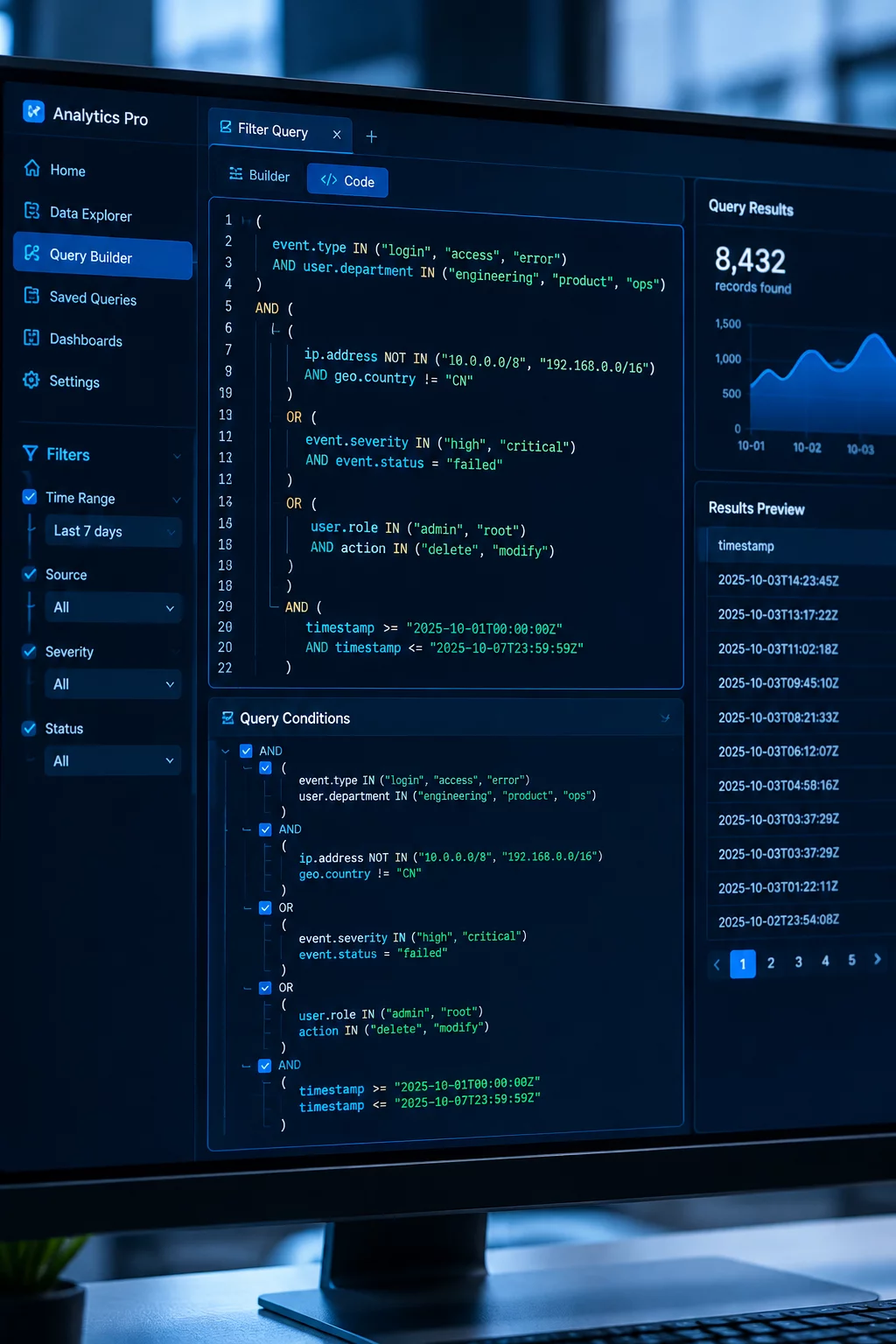
Structuring AND versus OR branches to prevent accidental exclusionary clauses that discard relevant analytical cohorts.
Implementation Casebooks
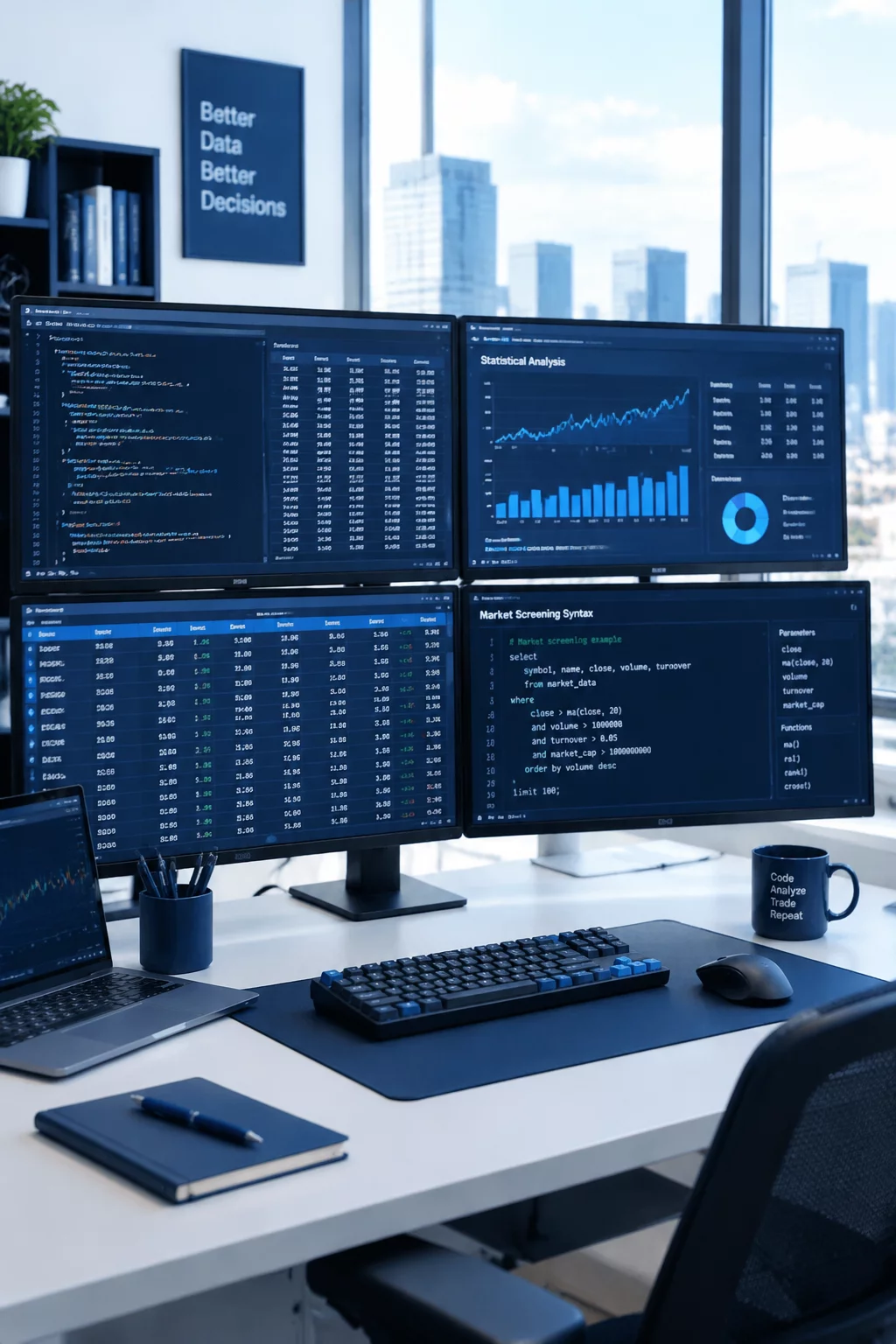
Documenting screen formulas across industry-standard scanning environments such as TC2000 EasyScan.