Multi-Horizon Alignment Case

Synchronizing Intraday Range Compression with Daily Trends

How multi-horizon screening architectures isolate tight 30-minute consolidation clusters without losing alignment with macro daily directional drift.

August 25, 2026
Julian Hayes
8 min read
Timeframe Cases
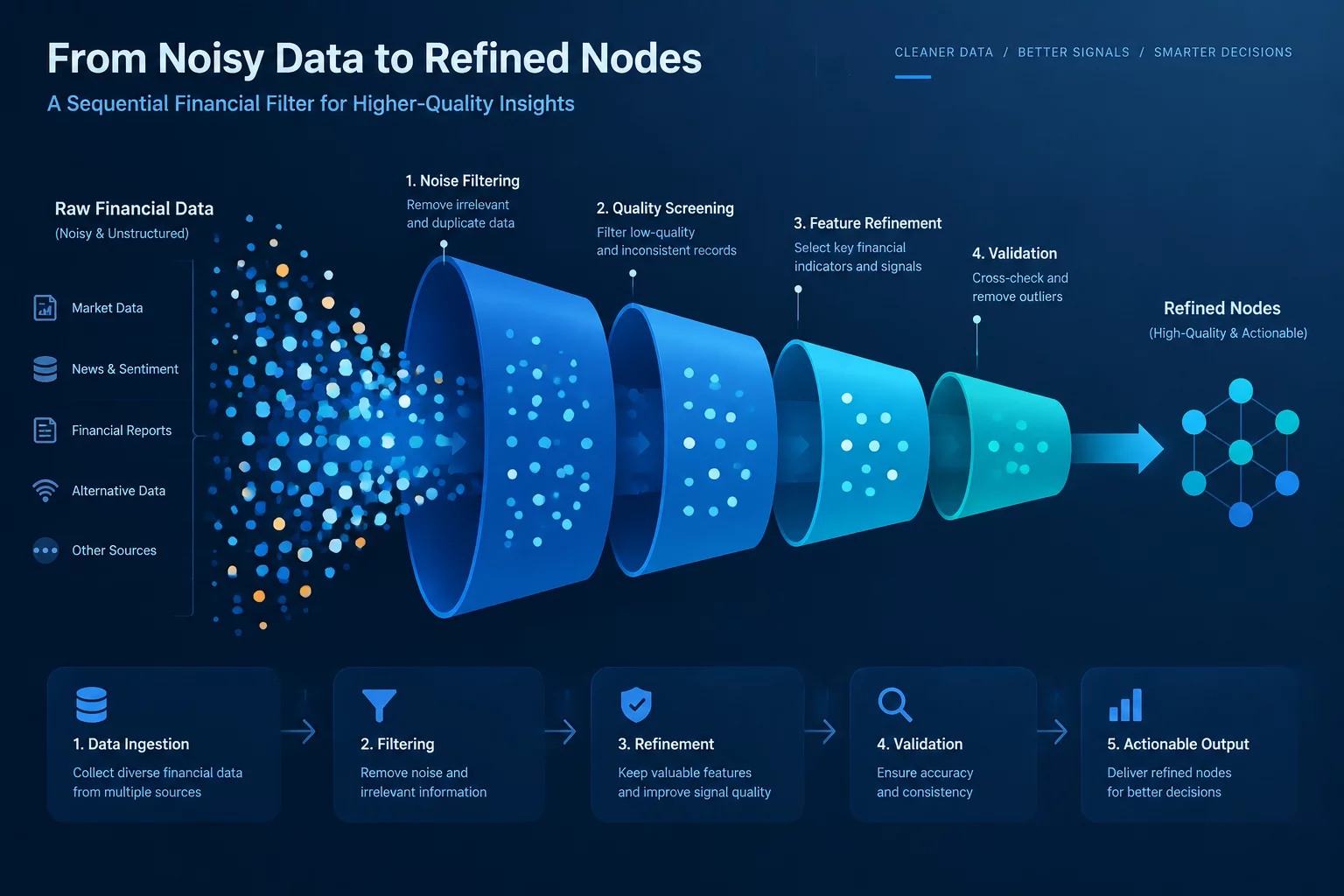
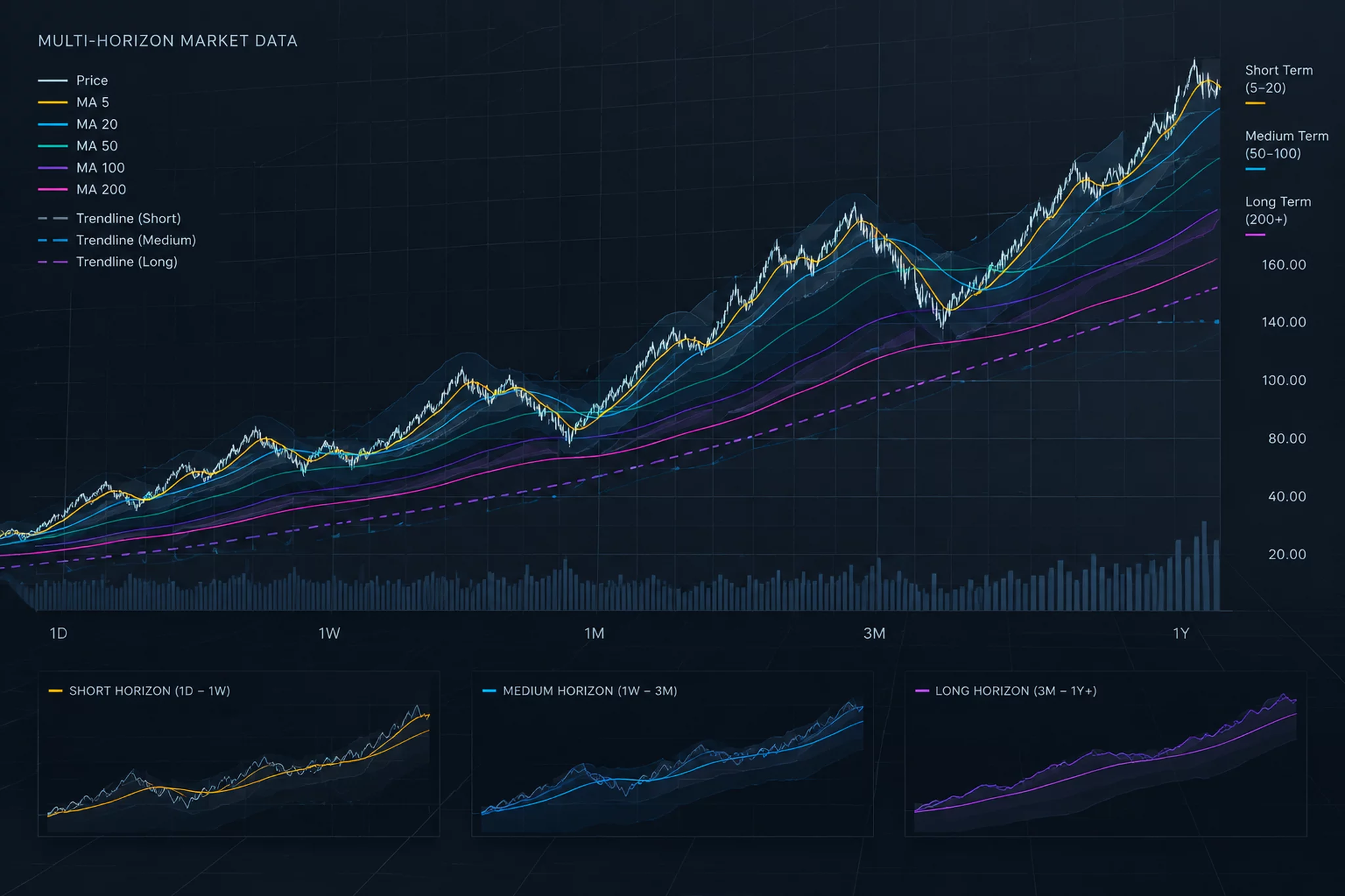
Multi-horizon technical screening architecture synchronizing 30-minute range compression with daily trend filters
Primary Scale
Daily Trend (D1)
Secondary Scale
Intraday Range (30m)
Filter Cascade
4 Logical Stages
Pass Rate
1.4% of Universe
Overview & Method Statement

Resolving Time Disparity in Multi-Horizon Scanning

Screening for narrow consolidation ranges on lower-tier intraday timeframes frequently captures dead or directionless symbols unless anchored to dominant daily directional drivers. This study deconstructs how a staged EasyScan pipeline verifies daily trend persistence before measuring 30-minute Average True Range (ATR) compression.

By establishing a clear hierarchy between daily structural criteria and intraday volatility bounds, the screening pipeline drops uncorrelated noise and isolates candidates where compressed intraday price action aligns cleanly with underlying multi-week momentum.

Key Analytical Takeaways

  • Intraday volatility contraction signals false breakouts when evaluated independently of the parent daily moving average slope.
  • Evaluating 30-minute high-low bandwidth as a ratio against 20-day historical ATR prevents regime misclassification.
  • Sequencing daily liquid universe boundaries ahead of intraday calculations reduces scanner latency and eliminates erratic penny spreads.
Index of Analysis
Timeline Progression
Execution Breakdown

Four-Stage Multi-Timeframe Synchronization Pipeline

01
Stage 1 • Macro Anchor Daily Timeframe (D1)

Daily Structural Trend Verification

The condition stack begins on the daily horizon by isolating liquid equities trading above an upward-sloping 50-day simple moving average where price also maintains positioning above the 20-day exponential moving average. This ensures the candidate universe possesses established structural demand before lower-timeframe calculations trigger.

Verification Rule: Daily Close > SMA(50) AND SMA(50) > SMA(50)[5] AND Daily Volume 50-day average > 750,000 shares.
02
Stage 2 • Compression Intraday (30-Minute Bars)

30-Minute Range Compression Measurement

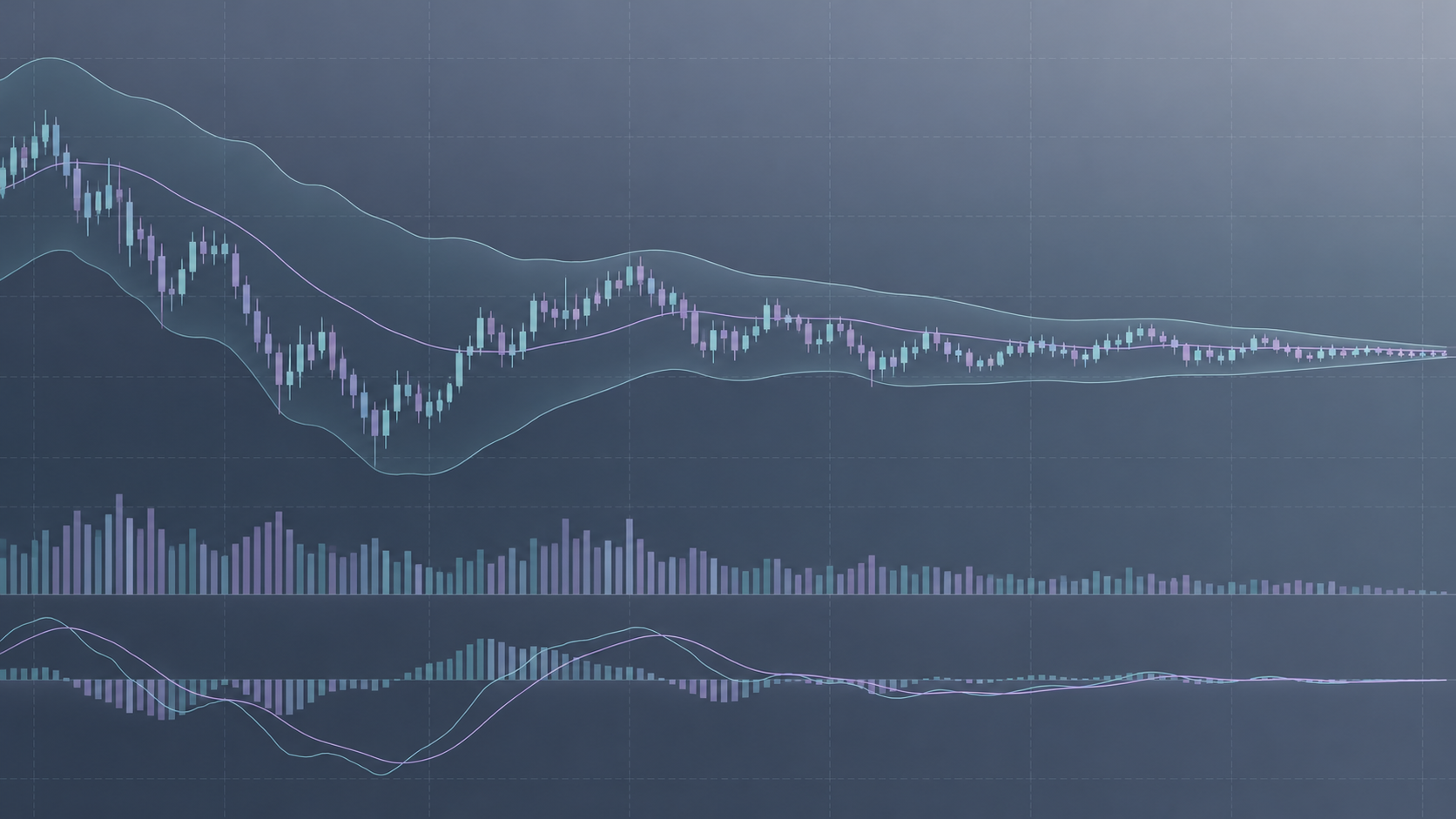
Once daily eligibility is confirmed, the scan computes the intraday price range across the most recent six 30-minute intervals. The maximum high minus minimum low over this window must register below 35% of the symbol's 14-day daily Average True Range, indicating acute coil behavior rather than normal intra-session drift.

Verification Rule: (Max(H, 6) - Min(L, 6)) / Daily_ATR(14) < 0.35 on the 30-minute aggregation tier.
03
Stage 3 • Relative Location Intraday / Daily Sync

Alignment with Upper Daily Boundary

Compression located near the lower band of a daily cycle often precedes breakdowns despite daily trend alignment. This step mandates that the compressed 30-minute consolidation corridor sits within the upper 15% of the preceding 5-day high-low envelope, proving buyers are defending overhead price levels.

Verification Rule: Min(L, 6) on 30m >= (Daily_High(5) - 0.15 * (Daily_High(5) - Daily_Low(5))).
04
Stage 4 • Volume Decay Intraday (30-Minute Bars)

Volume Desiccation during Consolidation

Range compression is vulnerable to false positives when accompanied by erratic block distribution. The fourth condition evaluates the average volume across the compressed 30-minute intervals, filtering out any candidate where volume exceeds 40% of the symbol's normal 30-minute volume benchmark.

Verification Rule: Volume_30m_Avg(6) < 0.40 * Volume_30m_SMA(50), confirming liquidity dry-up during consolidation.

Case Topic Taxonomy

Multi-Timeframe Logic Intraday Compression Daily Trend Anchor Volatility Contraction TC2000 PCF Scripts
Reference Architecture

Build Multi-Horizon Screening Rules Without Guesswork

Explore our comprehensive collection of condition stacks, order-of-operation benchmarks, and noise elimination cases.

Reader Questions & Case Feedback

Ask About This Screening Case

Tell us which condition or sequence you are investigating. Share a question, a correction, or a point that needs a clearer explanation.

Page reference

Synchronizing Intraday Range Compression with Daily Trends

Our editorial desk discusses educational screening logic. It does not provide securities recommendations or trade signals.

All fields are required. Please keep your question focused on educational screening logic.

ConditionStack Journal В· Editorial Desk

Thank you for your screening question.

Your inquiry has been received along with the page reference. Thank you for helping us make screening logic clearer.